
Dutchess County Resident Lookup Records
No single Dutchess County roster lists every resident. Each official source captures a different relationship, and knowing that difference is the real skill. A parcel record names an assessed owner. A deed names a party to a filing. A voter result speaks only to a submitted registration match. Choose the source that answers your actual question. Then note its date and any access limit. When two records agree on a name, municipality, address, year, spouse, case, or parcel grid, the match becomes strong evidence. It is no longer a loose lead, and a resident lookup gains real weight.
| Record | What It Confirms | Where | Access |
|---|---|---|---|
| Parcel or assessment roll | Assessed owner, situs, primary mailing address, and parcel identity | Dutchess ParcelAccess | Public search, with roll-date lag |
| Recorded land index | Grantor or grantee role, recording date, and legal parcel trail | County Clerk document search | Index and viewing generally free; certified copies through the Record Room |
| Voter lookup | A submitted registered-voter and poll-site match | NYS Voter Lookup | Requires last name, first name, date of birth, county, and ZIP or address information |
| Court docket | Party name, case or index number, case type, and appearances | New York eCourts | Selected public data; protected matters are withheld |
| Vital index or certificate | Event, date, place, certificate number, or family relationship | State Archives and local or state vital offices | Index and certificate access differ |
| License or entity record | Professional credential or business affiliation | State professional verification and business records | Public verification, not proof of a home address |
Let the record type set your route. A current property connection begins with the parcel and assessment record. An old transaction begins with the Clerk's party index. A family-history question may call for the State Archives index, a local registrar, or the Department of Health. A broad name search is the least reliable Dutchess County path.
Dutchess County Resident Name Variants
Write the name exactly as the first record prints it, then keep the useful variants nearby. Dutchess County names carry Dutch, Palatine German, New England, and Indigenous histories, so expect Van, De, and La spacing quirks, initials, anglicized given names, and maiden or married forms. The County Clerk index ignores punctuation, capitalization, and spaces. Library indexes and newspaper OCR often do not. Enter last name first where the Clerk expects that order, and anchor the search with a municipality, year, spouse, occupation, parcel grid, or address.
Common surnames demand restraint. A matching name on a deed is a lead, not proof of identity. Preserve the exact printed form even when a portal normalizes it. A court party, an assessed owner, and an obituary subject can be three different people unless a separate date, place, relationship, or legal parcel detail ties them together.
Dutchess County Voter Match Limits
The New York voter lookup is a narrow verification tool, not a browsing aid. It asks for last name, first name, date of birth, and county. It also accepts ZIP or address information. A result concerns one submitted registered voter and that voter's poll-site context. It is not a countywide roster. A non-match proves nothing about where a person has lived in Dutchess County.
Careful input matters. Bring a name you already have. Bring identifying details too, rather than trying to assemble a broad list of people. NYS Voter Lookup shows the fields required for an individual registration search.
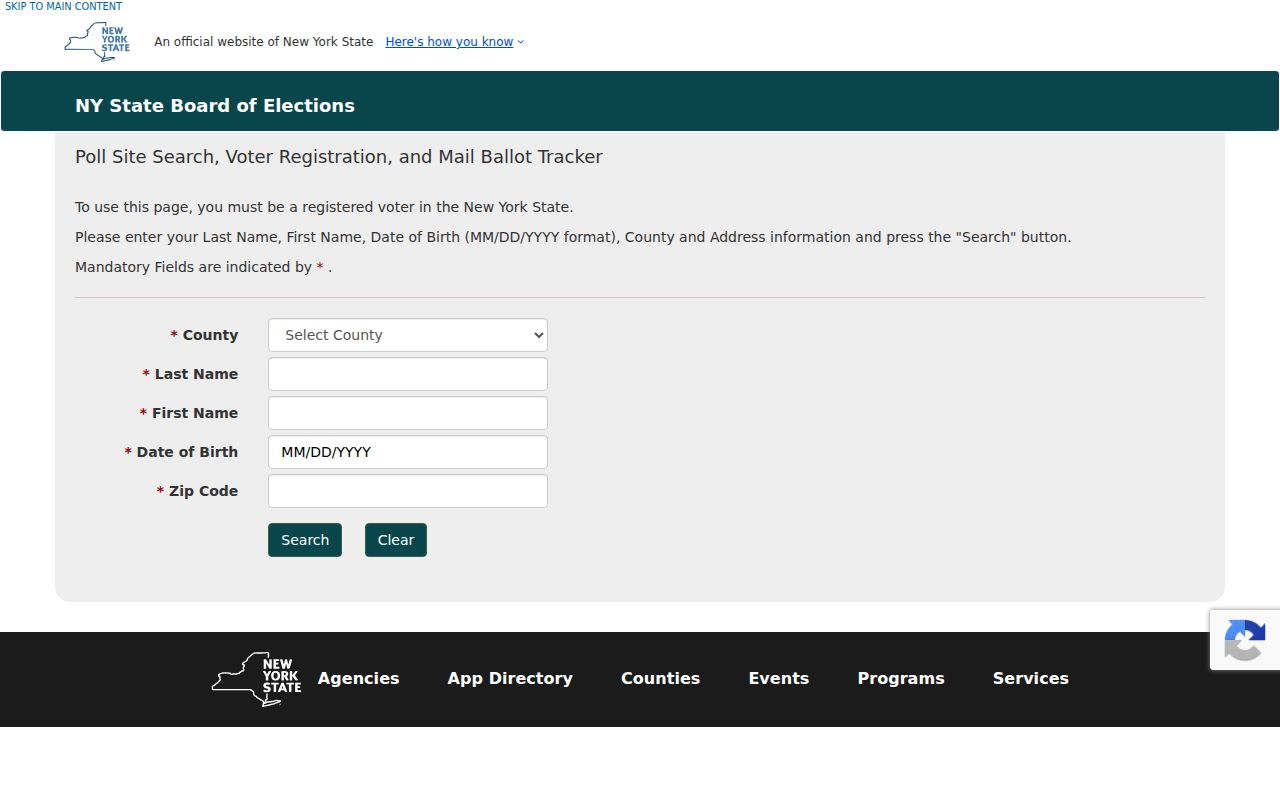
Treat any result as registration evidence and nothing more. Confirm a separate property, court, or family-history question with the office that keeps that record.
Dutchess County Resident Court Matches
eCourts runs separate paths for local civil, Supreme civil, criminal, family, and Surrogate's matters. WebCivil Local supports searches by index number, party name, attorney, judge, and calendar. NYSCEF offers a guest name search. It accepts Party or Attorney. It also takes business or organization and first, middle, and last name. Optional fields include county, case type, and filing dates. These fields come from the official instructions for each application.
| Case or index number | The identifier needed for a file request or a precise follow-up search. |
|---|---|
| Caption and party roles | The named parties and their connection to the case. |
| Court, county, type, and status | Context that separates similarly named Dutchess County parties. |
| Appearances and judge or part | Public case-detail context when the portal makes it available. |
| Document links | Available e-filed material, not a promise that every filing is online. |
Some material stays out of view. Sealed cases, youthful-offender matters, adoption files, certain Article 81 and Family Court details, and expunged or protected records may not appear in a search result. The Clerk of the Court or the County Clerk holds the official file. Court staff can explain access, copy, certification, and archive procedures. They cannot give legal advice, though. Staff can point you to the right office.
Dutchess County Resident History Records
For a long-ago Dutchess County resident, the name trail reaches beyond modern court and parcel systems. The County Clerk's Ancient Documents project covers the earliest layer. It has placed roughly 167,000 surviving legal-document pages from 1721 into the 1840s online. The MacCracken Index covers 1721 to 1800. A single name can surface in many roles. It may appear as a debtor, creditor, attorney, administrator, witness, defendant, officer, or party to a bond or warrant. Treat that as historical context, not proof of an address or current identity.
Dates need care too. The project warns that the date on an image may not match the date of the underlying event. Before placing a person in a Dutchess County family trail, pair an old result with its document type, city, and year. Then add a later deed, probate record, church register, census, or newspaper source.
Verify a Dutchess County Resident
Start with one fact and its keeper. A property question begins with ParcelAccess. A registration question begins with the voter lookup. An old recorded connection begins with the deed index. A tax-roll date, a recording date, a court appearance, and an obituary publication date each mean something different, and none of them equals a move date; every record keeps its own time logic.
- Record the name exactly, plus the municipality, street, parcel grid, year, or relationship already known.
- Search the source that owns that fact and retain the result identifier, such as a grid number, case number, or certificate number.
- Check a second independent source for an agreeing place, date, spouse, occupation, attorney, or legal description.
- Ask the custodian for the underlying file or an eligible certified copy when the result must be formally confirmed.
- Docket
- A court's running case record, which can list filings, appearances, and assigned court details.
- Index and image
- An index points to a record; an image is the document view, which may have different access or copy rules.
- Certified copy
- A copy issued by the custodian with official certification, subject to that office's eligibility and fee rules.
Dutchess County Resident Vital Paths
A Dutchess County vital search starts with geography. Where the birth, death, or marriage happened governs which office holds the record. Local registrars keep local copies for events in their municipalities. The New York State Department of Health keeps the statewide registry outside New York City. For older entries, the State Archives microfiche index covers births from 1881 to 1935. It also covers marriages from 1881 to 1960 and deaths from 1880 to 1960. Remember that this is an index room. Certificates come from the certificate office, not the microfiche drawers.
Genealogy copies follow age rules by record type. A birth must be on file at least 75 years. The person must also be known deceased. Death and marriage records use a 50-year threshold. A marriage requires both spouses known deceased. Direct-line descendants qualify for an exception when they show proof of descent and death. For a current certified copy, separate eligibility rules under Public Health Law Article 41 apply. If you know the municipality, its local office may be the faster route.
Dutchess County Resident Family Leads
Match the Dutchess County resident lookup to the real purpose. An heir search points to Surrogate's Court probate material, paired with deeds and obituaries. A former classmate search works better through yearbooks, reunion notices, and the Poughkeepsie local-history collections. Birth-parent questions belong with the NYS Adoption Information Registry. The Registry shares non-identifying information when available. It can also ease a reunion if participants register. No residents directory should be used to get around sealed adoption records.
A business connection calls for business sources. The NYS Corporation and Business Entity Database can confirm an affiliation. County Clerk assumed-name records and professional verification help too. Service-of-process, agent, and principal addresses are business facts. They do not add up to a residence. Unclaimed-funds results work the same way, since the claimant must prove identity and entitlement.
Dutchess County Resident Privacy
Gaps in a Dutchess County record are sometimes deliberate. The New York Address Confidentiality Program gives eligible participants a substitute Albany mailing address. The real address stays confidential in program records. Confidential voter registration under Election Law section 5-508 is separate from ordinary inspection. It lasts four years. Vital certificates, sealed court records, and protected personal information each carry their own access rules. So a missing address, a different tax mailing address, or a failed voter result is not automatically an error.
Lawful use. Use Dutchess County records for personal, lawful research and respect protected information. Repeated unwanted contact, surveillance, intimidation, or publication of a protected address can violate New York stalking or harassment law.
Dutchess County Resident Record Requests
When a public lookup comes back thin, take a narrow request straight to the keeper. The County Clerk Record Room handles a specific instrument or certified copy. A municipal clerk can advise on a local vital or permit file. A court clerk can locate a case or index file. The library or Dutchess County Historical Society can help with a focused directory or obituary question. New York's Freedom of Information Law opens agency records. It does not override vital eligibility rules or sealed court rules.
Put the essentials in writing: name, date range, municipality, and record type. Include the fields you want. Ask whether the file sits at the counter, in an archive, or in electronic form. That keeps the request manageable for the records office. It also leaves protected information protected.
Dutchess County Resident Registry Scope
The NYS Sex Offender Registry is a narrow public safety registry. It is not a general people directory or street directory for Dutchess County. The public subdirectory covers Level 2 and Level 3 records and offers one search mode at a time: last name, county, or ZIP. Results show only the registry information that program authorizes. That cannot support a conclusion about everyone on a block or a person's full history.
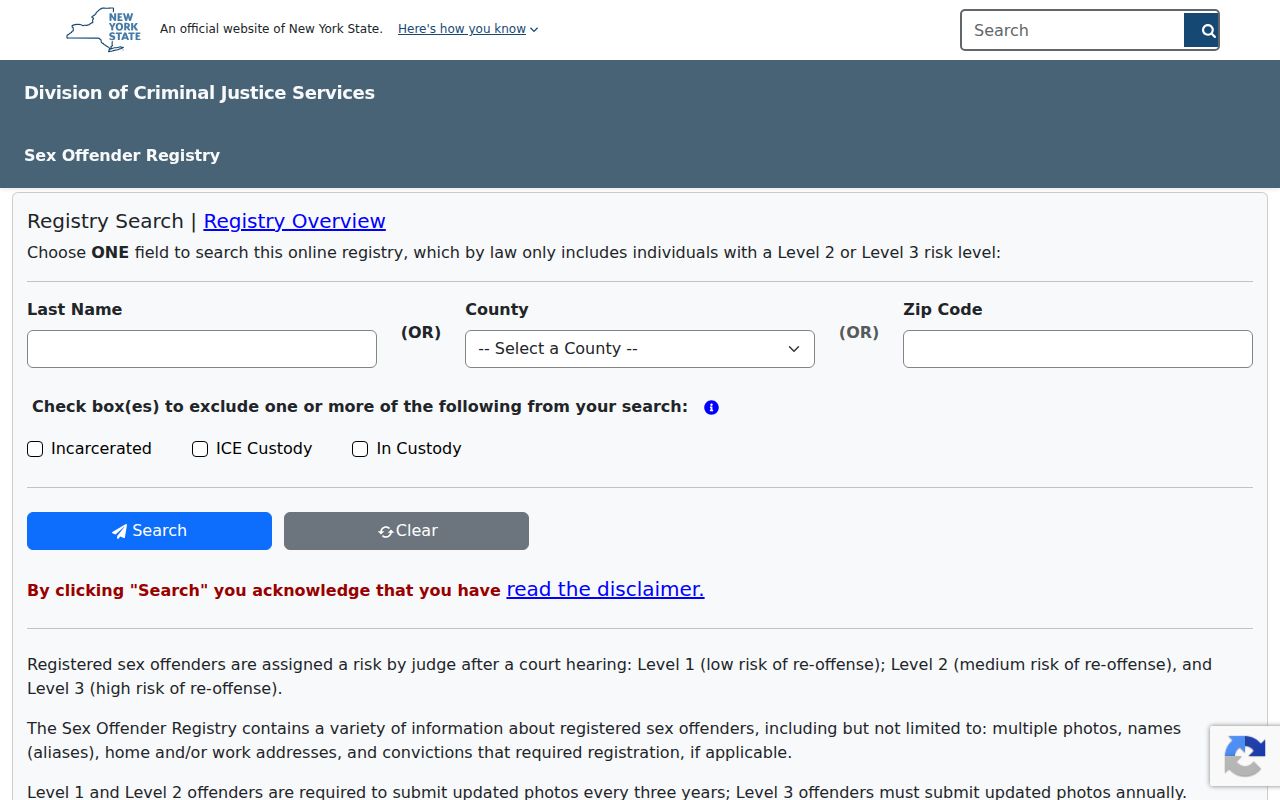
Stay within the registry's stated scope and safety context. A Level 1 or undetermined inquiry goes through a separate phone process with an extra identifier. A registry result must never be stretched into a broad Dutchess County residents list.